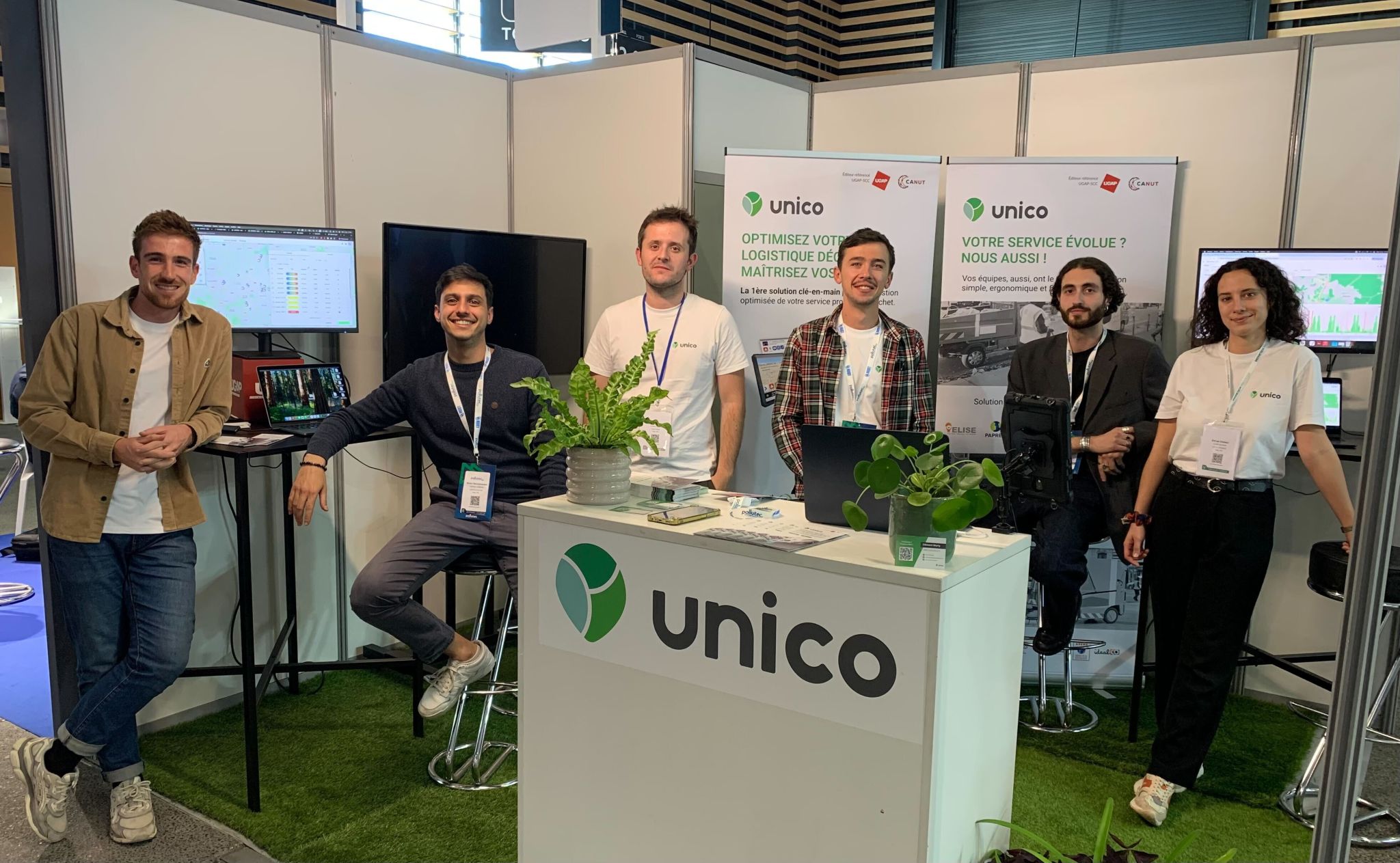
📍 Context
In the Toulouse area (depots in L'Union and Colombier-Saugnieu), collection teams were still largely relying on paper maps and standalone GPS units. Management wanted to gain field visibility (where are the trucks, what is happening on a route?) and rebalance workloads between routes, while deploying a tool that is simple and user-friendly for teams unfamiliar with "heavy" mapping solutions.
The challenges: moving away from paper-based processes, improving data reliability, standardizing routes, streamlining user complaints, and enhancing communication between field staff and management.
💡 Why choose UNICO?
According to Thomas Ramirez, Geolocation Technician (Toulouse) :
"What convinced us was the ergonomics and the speed of deployment. We wanted a tool that would immediately produce actionable data, without unnecessary complexity for our field teams."
The choice of UNICO was driven by:
- Operational adaptability : rapid configuration based on the specific realities of the depots (L'Union vs. Colombier-Saugnieu, unloading constraints, etc.).
- Clear interface for field use : simple GPS guidance, with maps that are easy to print and share.
- Hands-on support : responsive, iterative support from the UNICO team.
⚙️ Implementation & support
UNICO supported the Union and Colombier-Saugnieu depots with:
- Platform & GPS deployment across the three Toulouse depots.
- Optimization methodology for 2024 routes: time measurement (depot → sector → unloading → depot), break integration, analysis of one-way/two-way streets, duration thresholds (≤ 7 hours), and real-world testing.
- Route coding & planning directly in UNICO, followed by exports to QGIS for A0/A3 maps (enhanced readability for field staff).
- Training for approximately 150 drivers and 60 managers for use of the platform.
📊 Observed results
1. Route optimization
- Revised routes : approximately 500 routes (≈ 250 in Toulouse + ≈ 230 in Union/Colombier-Saugnieu) have been structured in UNICO.
- Workload balancing : eliminated discrepancies of 400 vs 1,000 bins per route; standardized by municipality and zone.
- Adaptation to local constraints : number of bins adjusted based on travel time (e.g., on-site emptying in Colombier-Saugnieu vs. return to depot in Union).
"UNICO helps us produce high-quality data: number of bins, balanced routes, and geographical consistency."
2. Improved working conditions
- Management : screenshots/route maps in one click to explain, brief, and adjust
- Drivers : simplified navigation and validation; clear visual support during testing and handovers.
- Resource rationalization :
- At L'Union : moving from 7 to 3 routes with constant staffing, which frees up slots to balance out overloaded routes.
- At Colombier-Saugnieu : reduction in the fleet used from 17 to 15 trucks during outings.
"For the end of the route and for complaints, the gain is huge. The tool makes the teams autonomous."
3. Internal communication fluidity
- Shared field/office support : printed maps, tracking of validations; factual discussions on difficulties encountered.
- Complaints : quick verification of visits/collections; objective reasoning to the benefit of drivers and the department.
Easily justify a visit or a missed collection; process requests without waiting for the team leader.
4. Field data utilization
- Centralization & access : one address → who collects, which depot, which day; GeoJSON exports for advanced mapping.
- Operational plans : systematic production of A3/A0 binders for teams (line thickness, street readability, etc.).
5. Other positive impacts
- Increased autonomy for depot managers and administrators.
- Data foundation for iteration: the test method (≤ 7 hours, validated volumes) creates a reusable base for future redesigns.
- Shared culture based on simple indicators (bins/municipality, real-time, safety rules).
🧭 Next steps
- Strengthen the use of relevant events (e.g., bins/vehicle maintenance) with training for point persons and automatic email routing.
- Continue balancing with the gradual integration of tonnage in industrial zones.
"We want to go further in leveraging data to support decision-making—and deploy the right events to the right point persons."
💬 Conclusion
The Toulouse experience shows how UNICO makes it possible to quickly structure dispersed operations: massive route optimization (~500), reduction in resources used (e.g. 17 → 15 trucks), autonomy for teams handling complaints, and better communication between the field and the office. UNICO establishes itself as an operational lever and for decision support, adapted to the real-world constraints of depots and public service requirements.